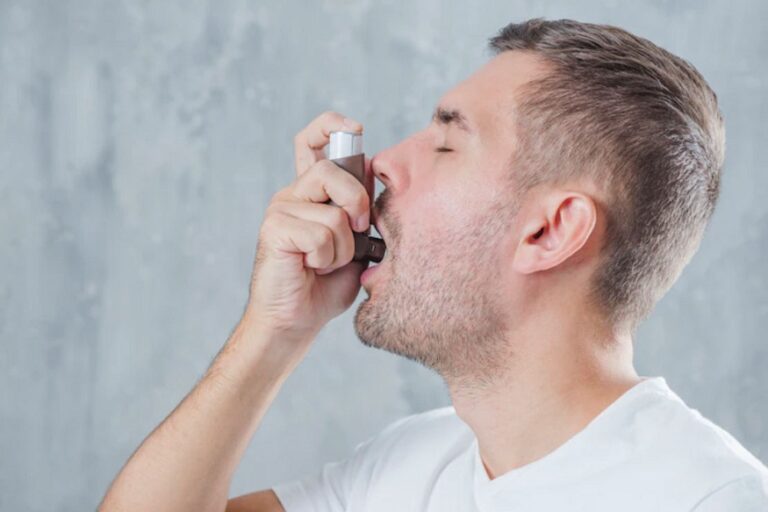
Coughing, wheezing, chest tightness, faster, shallower breathing, shortness of breath? These are the most common symptoms of an asthma attack. In France, more than 4 million people suffer from asthma, and this disease is responsible for more than 60,000 hospitalizations each year. The doctors on Livi have the answers.
In people with asthma, the airways are permanently inflamed, which can make them hyper-reactive and lead to contraction, edema, and mucus production in these small airways when exposed to certain factors. The consequences of this bronchial hyper-reactivity are coughing and wheezing and difficulty breathing. This is called an asthma attack. Between two asthma attacks, breathing is most often normal. The frequency and severity of attacks vary greatly over time and from one person to another.
What causes asthma?
If an asthmatic is exposed to a trigger, the ring-shaped smooth muscles surrounding the small airways in their lungs contract, narrowing their diameter. At the same time, the trigger worsens the inflammation: the mucous membrane swells and begins to secrete more mucus.
What are the symptoms of asthma?
Smooth muscle constriction causes the feeling of tightness in the chest. Excess mucus and increased inflammation can cause coughing. And the sound of wheezing? It comes from the constricting airways: air whistles as it passes through this narrowed space. These symptoms make the asthmatic feel as if they are short of air. Yet, counterintuitively, during an asthma attack, inflammation makes it harder to exhale than to inhale. Over time, this leads to excess air in the lungs, leading to lung distension.
What are the risks associated with asthma?
If the attack is intense and unusual, it is called severe acute asthma, characterized from the outset by great difficulty breathing, inability to speak, confusion, or even loss of consciousness. This is a life-threatening emergency, for which emergency medical services should be called by dialing 15 from a landline or 112 from a mobile phone.
When the asthma attack lasts several hours or several days despite treatment, it is called an asthma exacerbation. This can lead to hospitalization if home treatment reinforcement is not effective.
What treatment for asthma?
Unfortunately, there is no cure for asthma, but inhalers help asthmatics both control and prevent their symptoms. Inhalers deliver medication along the airways using a gas-propelled liquid or fine powder to treat the problem at its source.
Treating the attack : During an asthma attack, using an inhaler helps dilate the bronchi.
Maintenance therapy : Other inhaled corticosteroid inhalers serve as preventative therapy; they treat asthma symptoms over the long term. Corticosteroids reduce airway sensitivity and inflammation, which helps control asthma. They are also essential for preventing long-term damage caused by chronic inflammation.
Spot the warning signs
You can prevent an asthma attack before it happens by recognizing your triggers and early warning symptoms, such as when your chest tightens or your wheezing increases.
Listen to your body during physical exertion
To avoid an asthma attack, warm up gradually and avoid situations that trigger attacks, such as outdoor sports in cases of high pollution, cold, dry air, or pollen.
Keep stress levels as low as possible
Stress is a factor that can worsen the symptoms of a crisis. Although it’s not always easy to control, you can create habits to reduce it:
Be diligent in taking the prescribed treatment
DRDs reduce your risk of having an asthma attack by reducing the inflammation that builds up in your airways, which means your airways are less sensitive and you are less likely to react to your triggers.
It’s also important to check your breathing capacity using a peak flow meter. This device measures the effects of treatment and detects the onset of an asthma attack .
When to talk to a doctor?
If your usual treatment doesn’t seem to be effective against your asthma attack, contact your doctor for further instructions. If your asthma attack is unusual or if you don’t see any improvement, contact the emergency room immediately.
What to do if someone has an asthma attack?
If someone is having an asthma attack in front of you, follow these emergency steps. These tips also apply if you are experiencing an asthma attack.
About the Author